
Klow vs Glow Peptide: Complete Comparison Guide to Choose the Right Blend
Klow vs glow peptide differs in one key component: Klow adds KPV (10 mg) for anti-inflammatory effects to the GLOW base formula (GHK-Cu 50mg + BPC-157 10mg + TB-500 10mg). GLOW totals 70mg for skin/collagen focus; KLOW totals 80mg for tissue repair + inflammation control. Use GLOW for skin rejuvenation, anti-aging, and collagen research; use KLOW for gut repair, reactive skin, rosacea, chronic inflammation, or connective tissue healing.
Why Search “Klow vs Glow Peptide”?
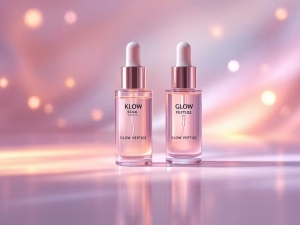 You’re probably searching klow vs glow peptide because you’re confused about which blend to choose for your research goals. Maybe you’re studying skin rejuvenation, tissue repair, gut health, or inflammation control, and both blends sound similar but have different applications. The mistake many make is thinking they’re interchangeable—KLOW and GLOW share three peptides, but KLOW’s addition of KPV fundamentally changes its anti-inflammatory profile and research applications. GLOW is dermatological-focused (skin/collagen), while KLOW is more systemic (gut + inflammation + tissue). I’ve reviewed formulation differences, research applications, and user experiences, and I’ll share exactly which blend fits your goals, how dosing differs, and critical research compliance requirements.
Important: Both KLOW and GLOW peptide are FOR RESEARCH USE ONLY – NOT FOR HUMAN USE. This is educational information for qualified research professionals conducting laboratory studies only.
What You Need to Know About Klow vs Glow Peptide
Formulation Breakdown: Side-by-Side Comparison
Key Differences at a Glance
The Core Difference: KPV Addition
What Is KPV?
KPV (Lysine-Proline-Valine) is a tri-peptide that’s the key differentiator between KLOW and GLOW:
-
Molecular weight: 10 mg in KLOW blend
-
Primary function: Anti-inflammatory effects
-
Mechanism: Core terminal signal of α-melanocyte-stimulating hormone with anti-inflammatory properties
-
Research focus:
-
Intestinal inflammation reduction
-
Keratinocyte apoptosis mitigation
-
Oxidative stress regulation
-
MAPK/NF-κB pathway modulation
-
Corneal epithelial wound healing
-
Why it matters: KPV’s addition to KLOW makes it superior for inflammation-focused research, while GLOW remains more focused on skin/collagen.
How KPV Changes KLOW’s Profile
Klow vs Glow Peptide: Primary Research Applications
GLOW Peptide: Best For…
Summary: GLOW is the dermatological and anti-aging research blend, ideal for skin biology, wound healing, and aging studies.
KLOW Peptide: Best For…
Summary: KLOW is the comprehensive healing + inflammation blend, ideal for tissue repair combined with chronic inflammation or gut health research.
Klow vs Glow Peptide: When to Choose Each
Choose GLOW If…
Best scenario: You’re studying skin biology, collagen production, or anti-aging pathways without significant inflammation concerns.
Choose KLOW If…
Best scenario: You’re studying tissue repair combined with inflammation control, gut health, or reactive skin conditions.
Klow vs Glow Peptide: Dosing Comparison
GLOW Peptide Dosing
KLOW Peptide Dosing
Note: Dosing is similar because both share the same three base peptides; KLOW has slightly higher concentration due to 80mg vs 70mg.
Klow vs Glow Peptide: Side Effects Comparison
GLOW Side Effects
KLOW Side Effects
Key difference: KLOW may cause slightly more digestive issues at high doses due to KPV’s gut-focused anti-inflammatory action, but both are extremely well-tolerated.
Klow vs Glow Peptide: Research Evidence & Support
GLOW Peptide Research
No clinical trials: No clinical trials have examined the specific GLOW three-peptide combination.
KLOW Peptide Research
No clinical trials: No clinical trials have examined the specific KLOW four-peptide combination.
Klow vs Glow Peptide: Safety & Compliance
Both Blends: Research Use Only
Critical: Both are FOR RESEARCH USE ONLY – not for human or veterinary consumption, medical treatment, therapeutic application, or diagnostic use.
Klow vs Glow Peptide: Cost & Availability
Price Comparison
Best value: KLOW provides one additional peptide (KPV) for enhanced anti-inflammatory effects, making it more comprehensive for multi-system research.
Klow vs Glow Peptide: Common Mistakes
Mistake 1: Using Them Interchangeably
Wrong: Assuming GLOW and KLOW work the same for all research goals.
Right: GLOW = skin/collagen focus; KLOW = tissue + inflammation + gut focus.
Mistake 2: Choosing KLOW for Pure Skin Research
Wrong: Using KLOW when inflammation isn’t a concern.
Right: GLOW is more cost-effective for pure dermatological research without inflammation.
Mistake 3: Choosing GLOW for Inflammation Focus
Wrong: Using GLOW for chronic inflammation or gut health.
Right: KLOW’s KPV makes it superior for inflammation-focused research.
Mistake 4: Not Understanding KPV’s Role
Wrong: Thinking KPV is minor or unnecessary.
Right: KPV fundamentally changes KLOW’s anti-inflammatory and gut health profile.
Frequently Asked Questions
What’s the difference between klow and glow peptide?
Klow vs glow peptide differs by one peptide: KLOW adds KPV (10 mg) for anti-inflammatory effects. GLOW = 70mg (3 peptides: GHK-Cu + BPC-157 + TB-500); KLOW = 80mg (4 peptides: adds KPV).
Which peptide is better for skin: klow or glow?
GLOW is better for skin if you’re focused on anti-aging, collagen, and rejuvenation without inflammation concerns. KLOW is better for reactive skin/rosacea requiring anti-inflammatory support via KPV.
Which peptide is better for gut health: klow or glow?
KLOW is better for gut health because KPV provides enhanced intestinal anti-inflammatory effects alongside BPC-157’s cytoprotection.
Is klow better for inflammation than glow?
Yes. KLOW’s KPV addition provides enhanced anti-inflammatory effects compared to GLOW’s TB-500-only approach.
Can I use klow and glow together?
Not recommended. Both share three peptides (GHK-Cu, BPC-157, TB-500), so stacking would cause redundancy. Choose based on your primary goal.
What’s the cost difference between klow and glow?
KLOW typically costs ~$10–$25 more due to 80mg vs 70mg and 4 peptides vs 3. KLOW provides better value for comprehensive healing + inflammation research.
How long should I cycle klow vs glow?
Both: 8–12 weeks standard, optional extension to 16 weeks. Follow with 2–4 week break.
Does klow have more side effects than glow?
Slightly. KLOW may cause mild digestive discomfort at high doses due to KPV’s gut focus, but both are extremely well-tolerated with rare mild effects.
Final Thoughts: Klow vs Glow Peptide – Which Should You Choose?
Klow vs glow peptide selection depends on your research goals:
-
Choose GLOW for skin rejuvenation, anti-aging, collagen production, wound healing without inflammation, or cosmetic research. It’s the dermatological-focused 3-peptide blend (70mg).
-
Choose KLOW for chronic inflammation, gut health/intestinal inflammation, reactive skin/rosacea, connective tissue repair with inflammation, or comprehensive multi-system healing. It’s the enhanced 4-peptide blend (80mg) with KPV for anti-inflammatory effects.
If you’re unsure: KLOW is more versatile because it covers both skin AND inflammation/gut, while GLOW is specialized for skin-only. KLOW’s KPV addition makes it the better choice for most comprehensive healing research.
Critical reminder: Both are FOR RESEARCH USE ONLY – NOT FOR HUMAN OR VETERINARY CONSUMPTION. Consult qualified research professionals for laboratory use.
For comparison tools and protocols, check klow vs glow peptide or peptide blend comparison.